A personal reflection on trans identity, visibility, and resilience, challenging the idea that being transgender is a ‘performance’.
What “Performance” Means in Queer Identity?
“Performance”: a hackneyed word in ideological bandwagons, artistic credibility, political explosives, gender wars and beyond. Unimaginably versatile, this word holds deep meaning for me and many queer people around us. Though peripheral to the rest of the world, the queer community, for deeper reasons, associates with it, and not by choice, but more often than not, there’s a subtle (or maybe not so subtle at all) compulsion of “performing”. Gender is an act, and there can be no gender before it ‘acts’, reflecting the sentiment of Judith Butler, be it in Gender Trouble (1990) or her essay “Performative Acts and Gender Constitution” (1988).
Why “disguise”?
It is daunting how much the act of performance is frowned upon when a transgender individual uses it as a medium of expression or as a ‘disguise’. Immediately shunned, dismissed, dehumanised, and dragged through the muddy pit, an antiquated ideology of binaries. Every self-reflecting moment that I spent as a transgender woman, every sincere perspective that I ever had, was the result of the conflict that I faced between my self-image and the image that society held of its own.
It is incredible that we, as a society, assume that a transgender person lives openly as such for some gain from this supposed “performance”. The more openly and authentically a trans individual lives, the ‘performative’ it becomes for them. As if, a spectacle: a theatrical experience for the world to consume, for one to discard once the entertainment value has run dry.
Growing Up Trans in a Binary World
Growing up, like most, I heard it all: “girly”, “ladies”, “chakka”, “Hijra”, “Maagi” and countless other terms hurled at me. And no, I do not consider words in and of themselves to be derogatory; it is the intent that makes them scornful. I assert these words are mine, not because I need to reclaim them, but because they were always mine, to begin with. Strangely enough, right when I started embracing my “girliness”, it became, “You’ll never be a girl”, “Wearing women’s clothes doesn’t make you a woman”, “It’s XX chromosomes”, “you’re still a boy”. Only propagating myself to delve deep into the ‘ultimate act of self-realisation’, as reflected in Chitrangada: The Crowning Wish (2012) by Rituparno Ghosh through the character portrayal of ‘Rudro’.
Erasure of Intersex and Trans Experiences
Intersex people face similar erasure and sometimes even worse, despite biological and medical realities. Very conveniently, it shows the desperation for power, about who gets to decide legitimacy, and how much control they can have over queer folks. This must be acknowledged in discussions of transgender lives, as both communities are marginalised by the same binary frameworks that seek to invalidate their existence. Differences of Sex Development (DSDs), such as Klinefelter Syndrome, Turner Syndrome, and AIS, show how complex gender is, and yet society simplifies it for its own comfort.
Media Representation and Misrepresentation
Media, too, distorts the realities. Transgender representation is often a caricature, a shallow attempt by non-trans or non-queer folks to depict lives from a ‘heteronormative ease’. And the result? It is exaggerated stereotypes that amuse the majority, but erase the truth of trans experiences.
I refuse to call my journey “luck.” Neither will I ever refer to it as “privilege”. Because, understandably, the life I have, the spaces I inhabit, everything was obtained through work, dedication, and persistent effort. My parents never “kicked me out”, or “forced me into conversion therapy”, or let anyone “shame me”. But is it worth celebrating anything as basic as loving and protecting your child? Certainly not. Regardless, I have much to thank them for. Despite their humble socio-economic background, with almost no formal education, limited financial means, and few resources, they embraced their child in a way that many well-educated and financially secure parents fail to do. Religious as they are, they refused to twist faith into a weapon against those who live differently. Incredible? Maybe not, since the whole ‘essence’ of faith lies in compassion and kindness toward all.
Survival, Resilience, and Finding My Voice
What changed my course of action is when I learned, at just 10 years old, that hunger changes perception. No matter how romantic the full moon looks, to an empty stomach, it appears to be just a piece of bread. That truth stayed with me. Later, I found the same sentiment echoed in Raj Nandy’s poem Moon Like a Rolled-Out Bread.
I refuse to fight an ideological battle; instead, I choose to contribute to meals at the table, to assist my parents and anyone who matters. My benchmark is showing up, giving my best, and carving a life that is truly mine. Gender debates never diverted my attention from the things that truly matter; speaking for myself, growing, and refusing to live as a mask.
My story refuses to seek sympathy, but demands attention; it necessitates visibility. I am the victor, not a victim. I am declaring that being transgender is not a performance, nor a disguise; it is a way of being, working, and aspiring like anyone else. And telling from my own mouth matters because it is only mine to tell.
Idea Behind the Article
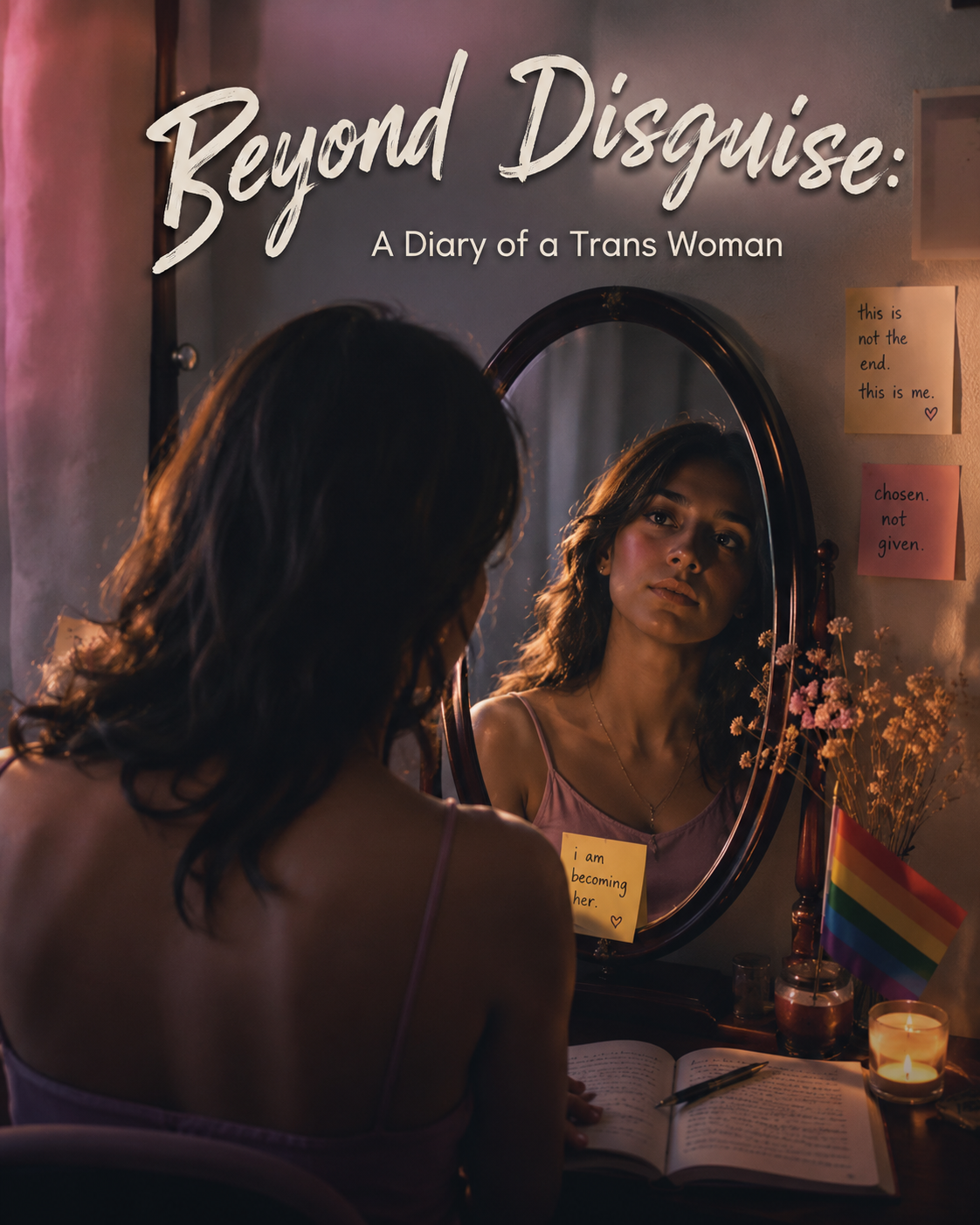
Beyond Disguise: A Diary of a Trans Woman originates from a desire to dismantle the myths built around transgender lives. Transgender people have often had their lives framed as a “performance” or spectacle, rather than as a lived human experience.
In this work, the author explores that tension — the space between how trans people see themselves and how society attempts to define them. This piece is not a story rooted in victimhood; it is one of determination, dignity, and humanity. Through an authentic voice, the article seeks to expand representation, challenge harmful stereotypes, and shed light on both the ordinary and extraordinary realities of living as a trans woman in a heavily gender-binary society.
About the Author
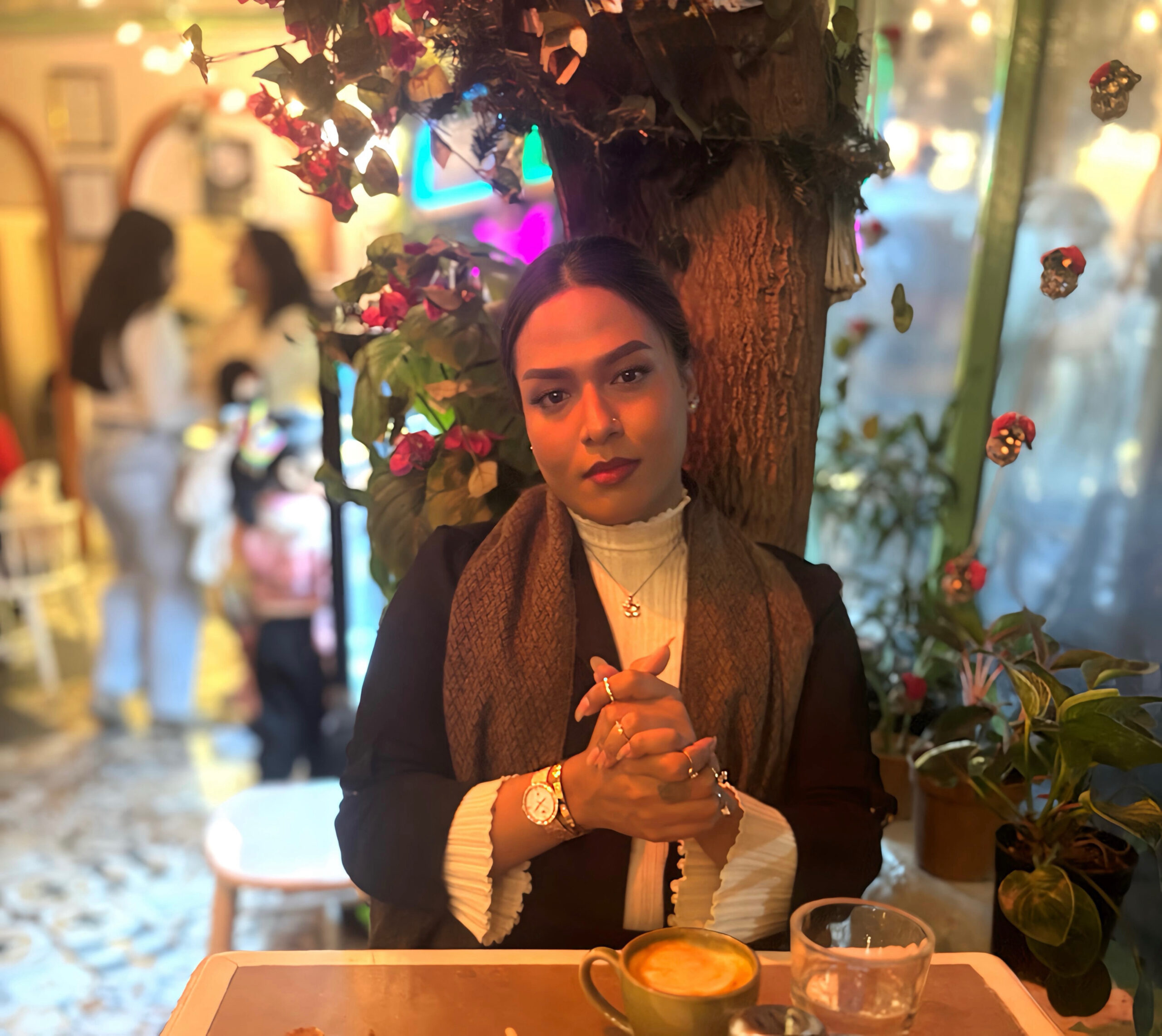
Madhu is a trans woman originally from Kolkata and currently works as a Senior Content Writer. Over the course of five years in the corporate sector, she has explored multiple forms of writing, including SEO articles, blogs, academic writing, and research-based content.
Alongside her professional work as a writer, she has also contributed as an LLM Trainer and Evaluator (English C2+) and a Senior/Expert Data Annotator for Artificial Intelligence , supporting language training for AI projects. Drawing from her lived experiences and a keen attention to subtle social realities, Moy brings a deeply personal yet analytical voice to her writing.
She strongly believes in the power of storytelling to challenge stereotypes and create empathy — a belief that is reflected throughout this piece.